
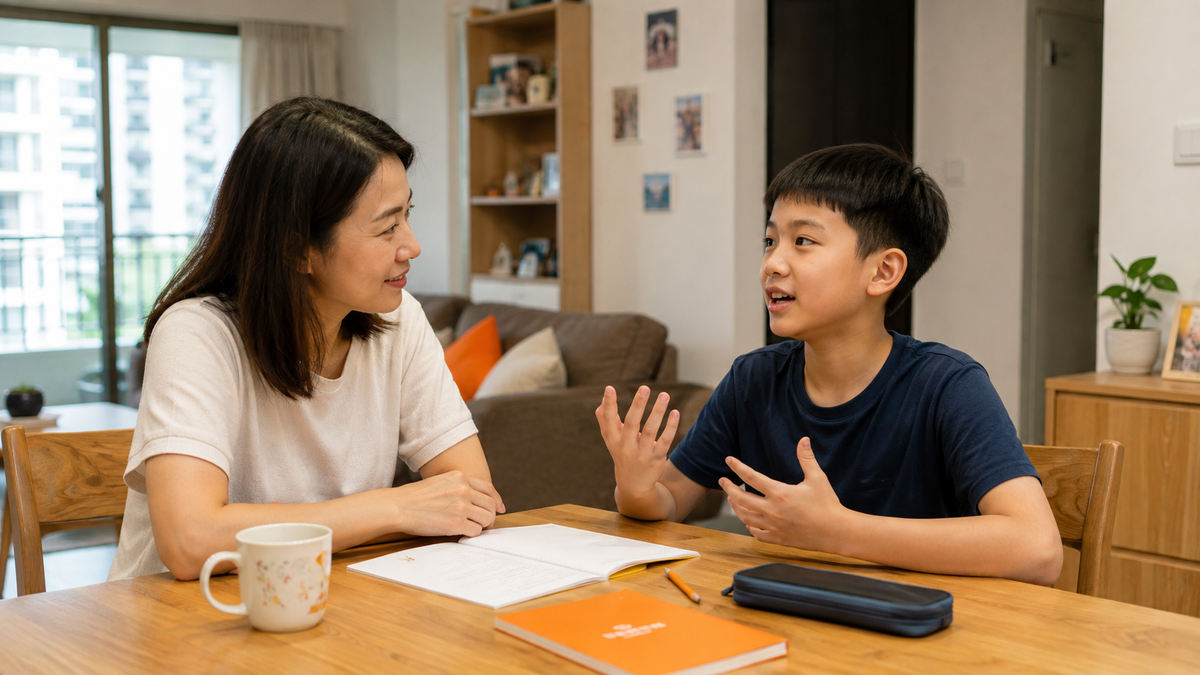
Preparing early for the PSLE English Oral Examination can make a meaningful difference to your child's confidence and performance. With regular practice, useful topic vocabulary and the right answering techniques, students can learn to express their thoughts clearly instead of freezing when they encounter an unfamiliar question.
However, effective oral preparation is not simply about memorising model answers. Students need to understand common themes, develop their own opinions and build a bank of personal experiences that they can adapt to different questions.
In this 2026 PSLE Oral Topics Guide, we will explain the latest examination format, introduce important themes your child should prepare for and share practical strategies that parents can use at home.
Understanding the 2026 PSLE English Oral Examination
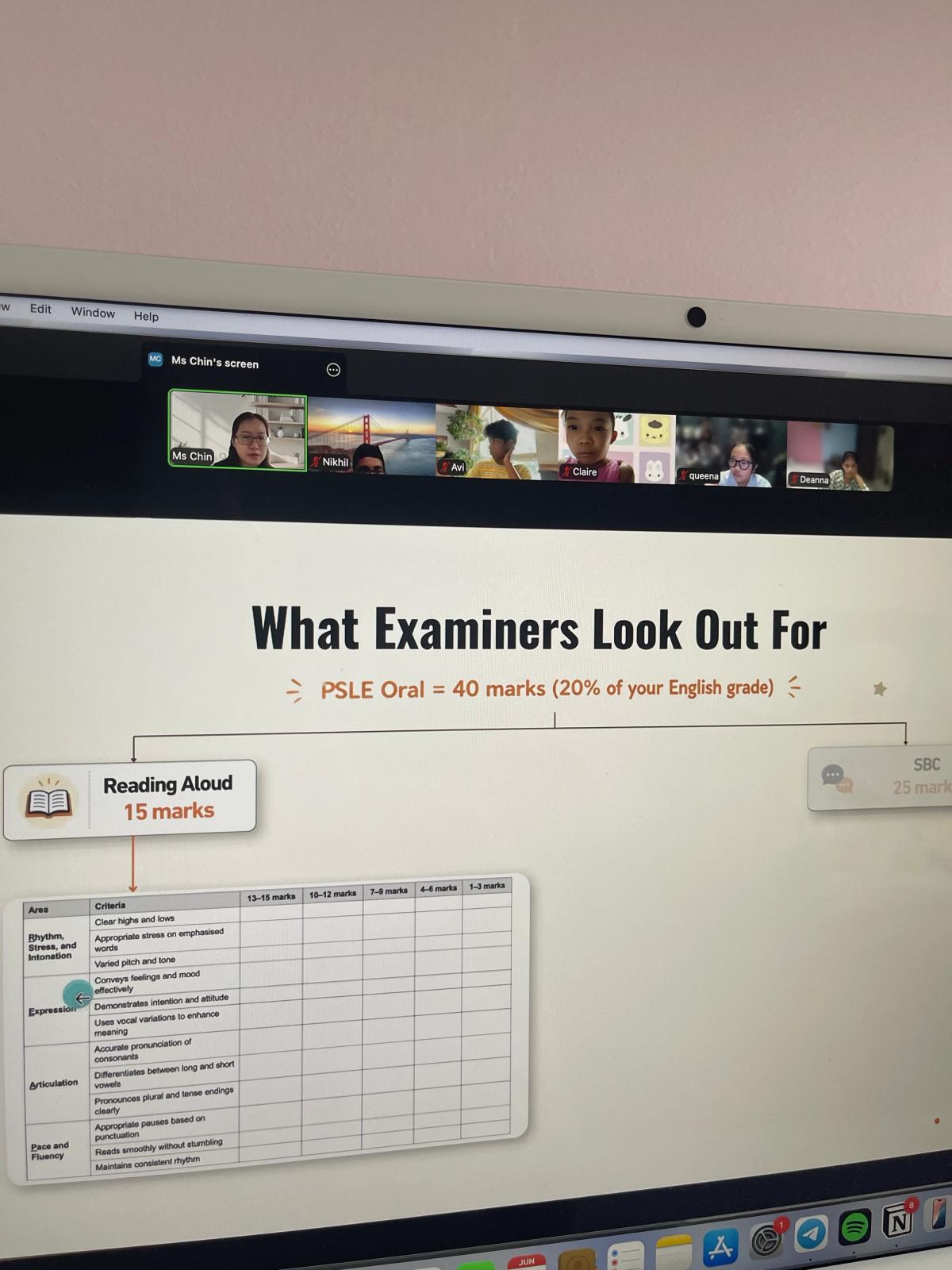
The PSLE English Oral Examination is Paper 4 of the English Language examination. It carries 40 marks and accounts for 20% of the overall English grade. Students receive approximately five minutes of preparation time, followed by about five minutes of examination time.
The examination consists of two parts:
Component | Marks | What Students Need to Do | Key Skills |
|---|---|---|---|
Reading Aloud | 15 | Read according to the stated purpose, audience and context | Pronunciation, fluency, pacing, emphasis, expression |
Stimulus-Based Conversation | 25 | Discuss ideas based on a photograph and related questions | Opinions, explanations, personal experiences, vocabulary |
Common PSLE Oral Topics to Prepare for in 2026
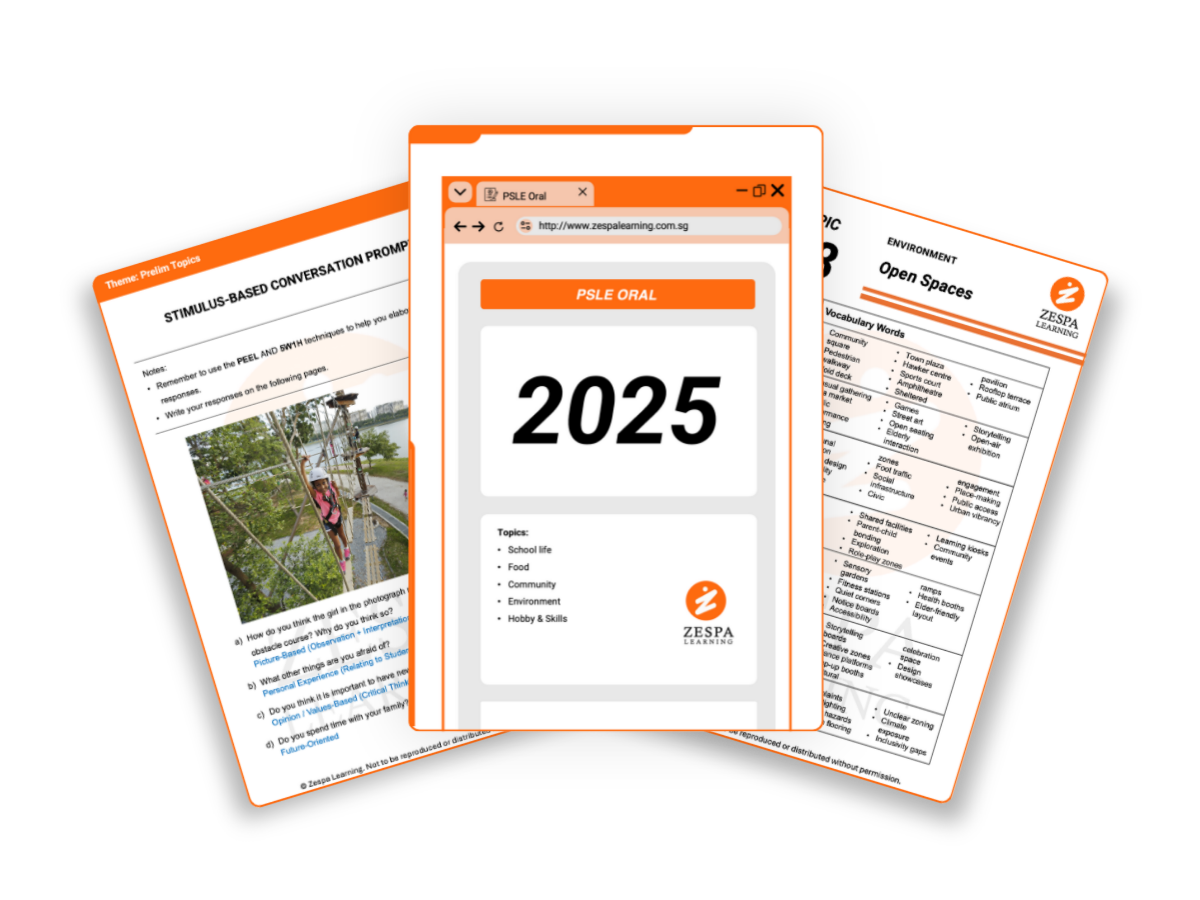
A strong way to prepare is to organise ideas, experiences and vocabulary according to broad themes. Here are eight important PSLE Oral topics that students should be familiar with. You can also use our Free PSLE Oral Notes for additional vocabulary, answering techniques and guided practice.
Topic | Students May Discuss | Useful Vocabulary | Preparation Tip |
|---|---|---|---|
School & Learning | CCAs, school events, group projects, school rules | collaborative learning, leadership opportunities, resilience | Prepare 2–3 meaningful school experiences |
Family & Friendships | Family bonding, disagreements, helping others, friendship | mutual respect, emotional support, strengthen family bonds | Explain how an experience affected or taught you something |
Community & Responsibility | Volunteering, public behaviour, helping others | civic responsibility, community spirit, considerate behaviour | Explain how individual actions affect others |
Health & Well-Being | Exercise, sleep, diet, stress, work-life balance | active lifestyle, mental resilience, balanced diet | Connect personal habits to wider benefits |
Environment | Recycling, food waste, conservation, sustainability | sustainable habits, conserve resources, raise awareness | Suggest both personal and community solutions |
Technology & Online Safety | Social media, screen time, online learning, scams | digital literacy, online safety, screen time management | Present both advantages and disadvantages |
Food & Healthy Eating | Hawker food, nutrition, food waste, cultural dishes | nutritious meal, local delicacies, culinary heritage | Use sensory details and personal experiences |
Hobbies, Sports & Leisure | Sports, music, reading, art, coding | creative outlet, self-discipline, sense of accomplishment | Explain what you do, why you enjoy it and what you learn |
How Should Students Answer PSLE Oral Questions?
Knowing a topic is not enough. Students also need a reliable structure to organise their ideas.
A useful response can contain four parts:
1. Answer the question directly
Begin with a clear opinion or response.
Yes, I believe schools should organise more community service activities.
2. Explain the reason
Develop the main idea instead of repeating the same point.
Such activities allow students to understand the difficulties faced by others and become more compassionate.
3. Provide a specific example
Use a personal experience, observation or realistic situation.
Last year, I participated in a food donation drive organised by my school. My classmates and I collected canned food and packed it into boxes for families who needed additional support.
4. Share a reflection
Explain what was learnt or connect the example to a broader message.
This experience taught me that even a simple contribution can make a meaningful difference when many people work together.
This structure helps students move beyond one-sentence responses and develop answers that are personal, organised and thoughtful.
How Parents Can Help Their Child Prepare
Hold regular conversations at home
Ask open-ended questions during meals, car rides or family outings. Instead of questions that require only "yes" or "no", ask your child to explain their opinions.
Build a bank of personal experiences
Students often struggle because they cannot think of examples during the examination.
Help your child prepare experiences involving challenges, teamwork, mistakes and achievements
Practise with photographs
Use photographs showing everyday situations such as a sports event, community activity, hawker centre or family outing.
Ask your child to describe, give an opinion, relate an experience and suggest a solution.
Teach vocabulary in context
Memorising long lists of impressive words is not enough. Students must know how to use each expression naturally and accurately.
Record and review responses
Recording a practice response allows students to notice issues that may be difficult to detect while speaking.
Listen for pauses, repetition, unclear pronunciation and undeveloped answers.
Students should improve one or two areas at a time instead of attempting to correct everything immediately.
Prepare Reading Aloud separately
Since the Reading Aloud passage and Stimulus-Based Conversation topic are not connected, students should dedicate sufficient time to both components.
For Reading Aloud, encourage your child to identify the speaker, audience, purpose and appropriate tone before reading.
Understanding the situation before reading will help the student sound more natural and purposeful.
Start Preparing for the 2026 PSLE Oral Examination
Strong oral skills cannot be developed through last-minute memorisation. Students need repeated opportunities to organise their thoughts, apply useful vocabulary and speak confidently about a range of familiar issues.
At Zespa Learning, we help students prepare through structured answering techniques, topic-based content packages, model responses and guided oral practice via our PSLE Oral holiday programme. Students receive personalised feedback on their pronunciation, fluency, vocabulary, examples and development of ideas so that they understand exactly how to improve.
Give your child the techniques, vocabulary and practice needed to approach the 2026 PSLE English Oral Examination with confidence. Book a trial class with Zespa Learning today and help your child turn their ideas into clear, engaging and well-developed responses.